


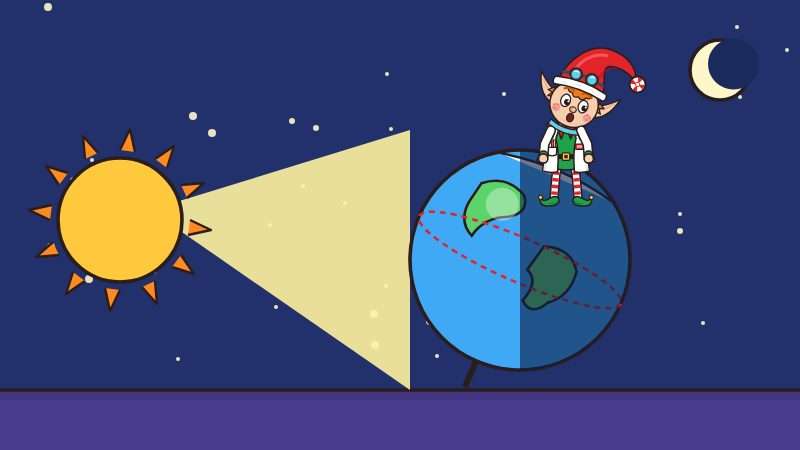
It is pitch dark at the North Pole this December, and Pip is sure it is because Earth is far from the Sun. Your class has 15 school days to prove him wrong. The Longest Night is a free seasons lab for middle school, run as a 15-day classroom elf countdown.
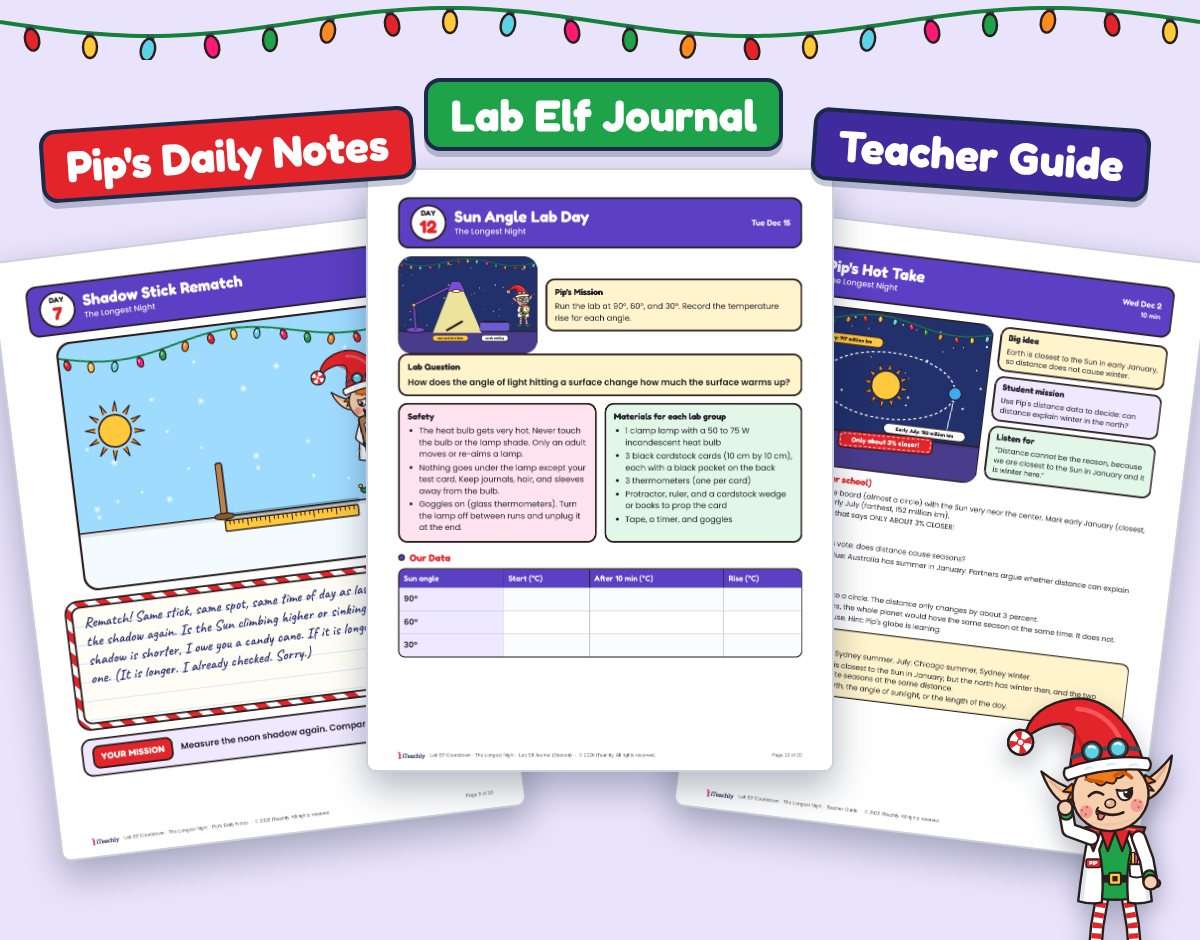
- Pip's Daily Notes · 18 pages
- Lab Elf Journal · 20 pages
- Teacher Guide · 24 pages
Get The Longest Night Free
Tell us where to send it. We email you one link to all three PDFs. Sign up once and Pip emails you his other two free labs too.
The sign-up form did not load. Your network may be blocking it. Try again on your phone or at home, or open the form in a new tab.
Why a personal email? Many school filters block emails with download links. Gmail, Yahoo, Outlook and iCloud all work great.
We'll also send you free science labs and news from iTeachly. Unsubscribe anytime.
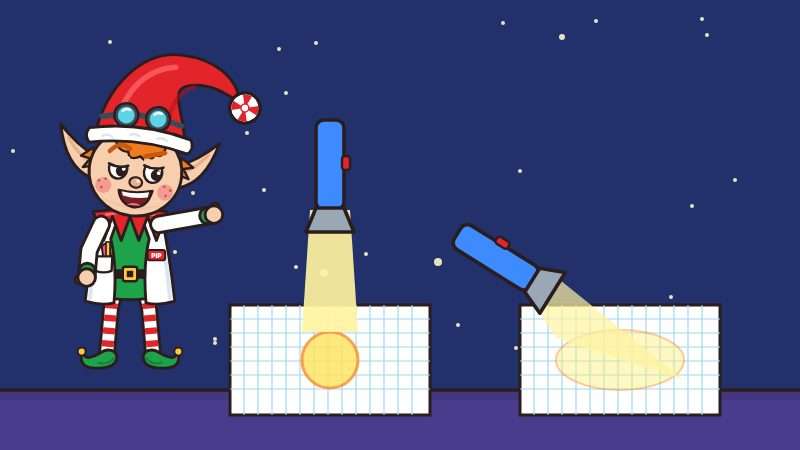
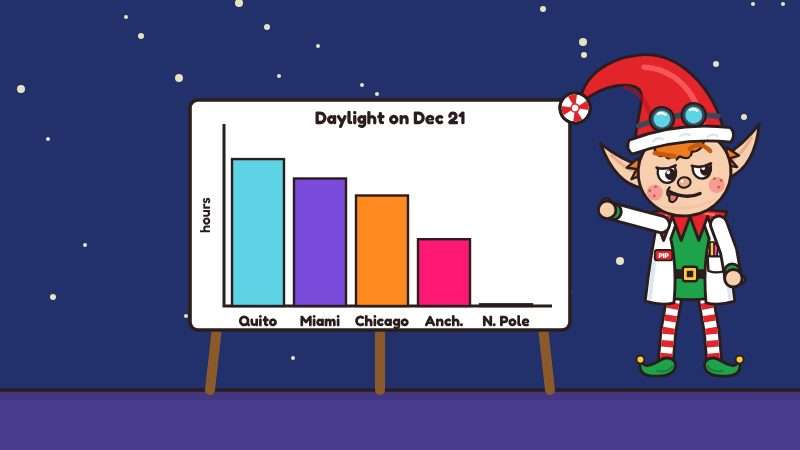
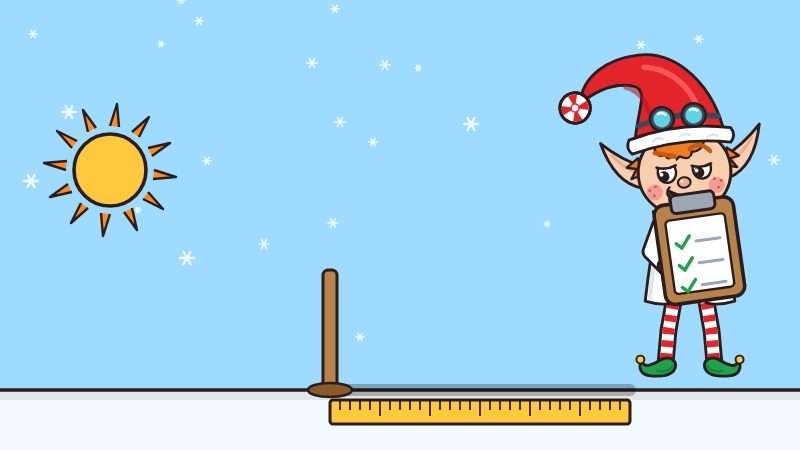
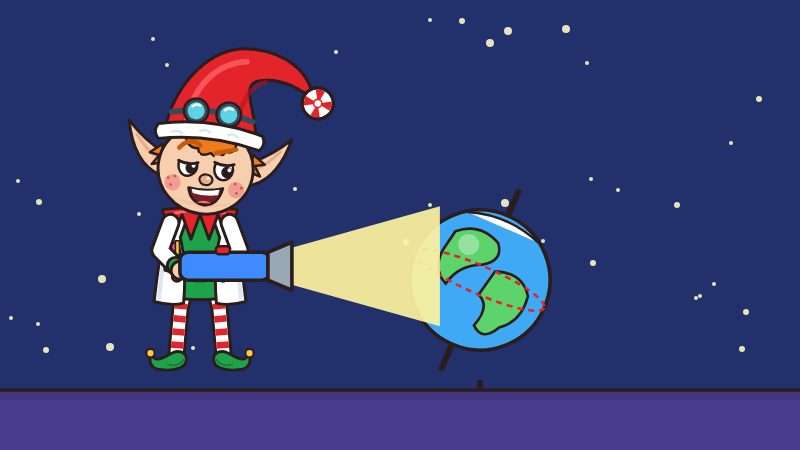
Every school day from November 30 to December 18, Pip the Lab Elf shows up in a new science scene with a note and a mission. In 10 short warm-ups your students track noon shadows, graph daylight data and model Earth's tilt. Then they spend the last week running a sun angle lab that shows the real reason for the seasons: why December is cold in the north while it is summer in Australia.
It's built for grades 6 to 8 and it fits the school days you actually have in December. Days 1 to 10 take 10 to 15 minutes each. Days 11 to 15 are full class periods for the lab. The whole thing is free: Pip's notes, the student journal, and a Teacher Guide with answer keys.
What Is the Lab Elf Countdown?
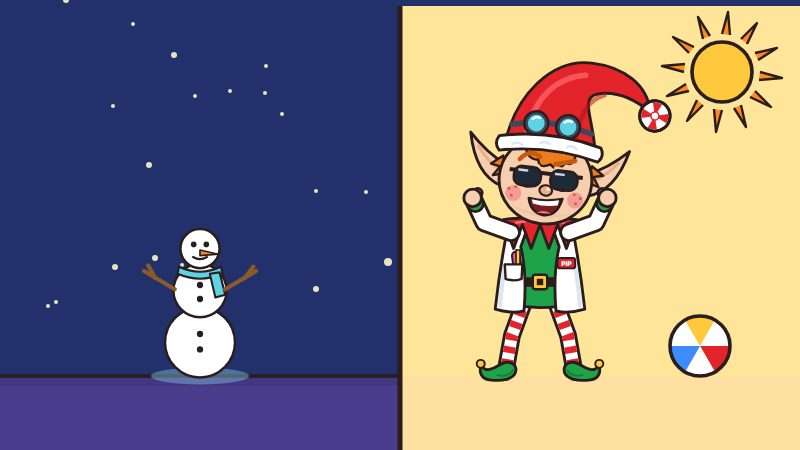
Middle schoolers will tell you they are too old for a classroom elf. Pip is built to win them over anyway. He shows up in a beaker with goggles on his hat, he is wrong on purpose, and your students get to correct him with evidence. December is the hardest month to keep a class focused, and every day of this teaches real science.
Each day students walk in and find Pip in a new science scene with a note. The note sets up a 10 to 15 minute mini investigation that teaches one piece of the science. By Day 10 they have every idea they need, and Days 11 to 15 become a full NGSS lab that ends right before winter break.
After school. Move Pip and build the scene on that day's page. Most scenes take about 5 minutes, and the picture shows exactly how.
Before class. Print or project Pip's note and leave it with him.
In class. Students find Pip, read the note and complete the mission in their journal. Then you teach your regular lesson.
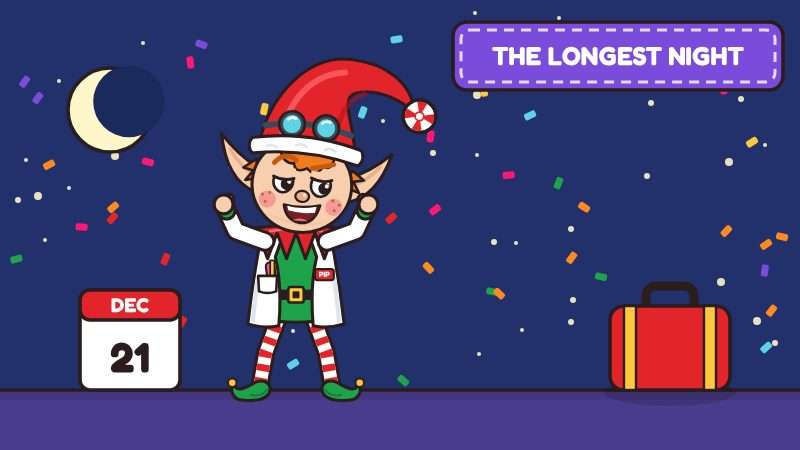
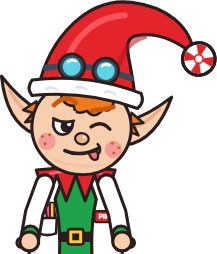
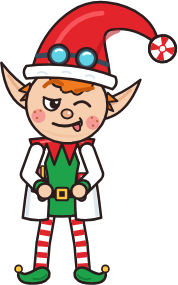
Meet Professor Pip Peppermint
Lab Elf, North Pole Division of Science. Smart, ornery, and wrong just often enough that your students get to correct him with evidence.
- He never moves while students are watching.
- If someone touches him, sprinkle a little "science dust" beside him the next day and tell the class Pip forgives them.
- No elf doll? Print the Pip stand-up cutout on the last page of Pip's Daily Notes.
What Is in the Free Seasons Lab Download
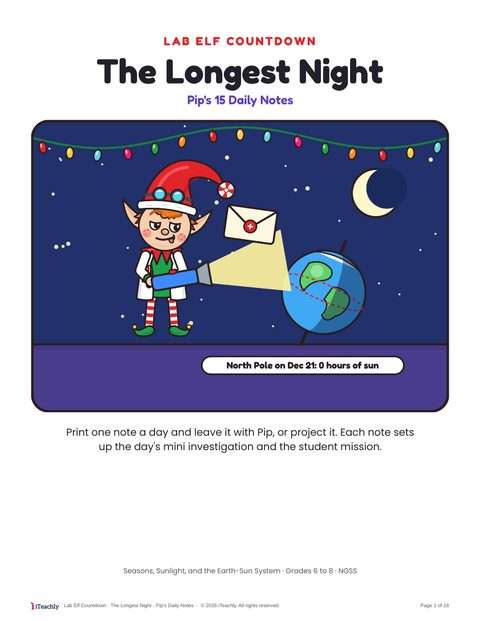 18 pages
Pip's Daily Notes
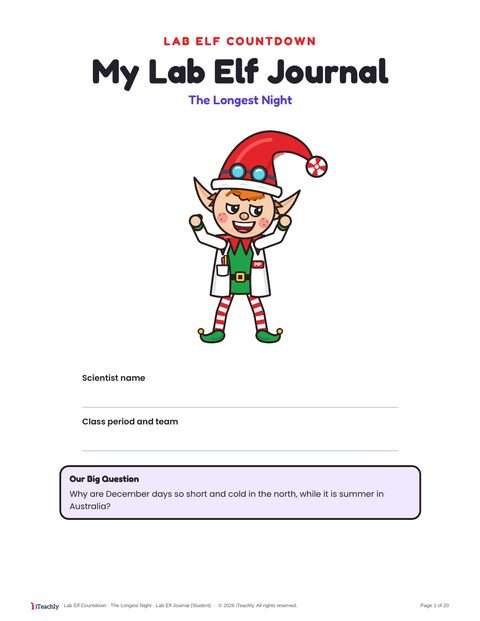 20 pages
Lab Elf Journal
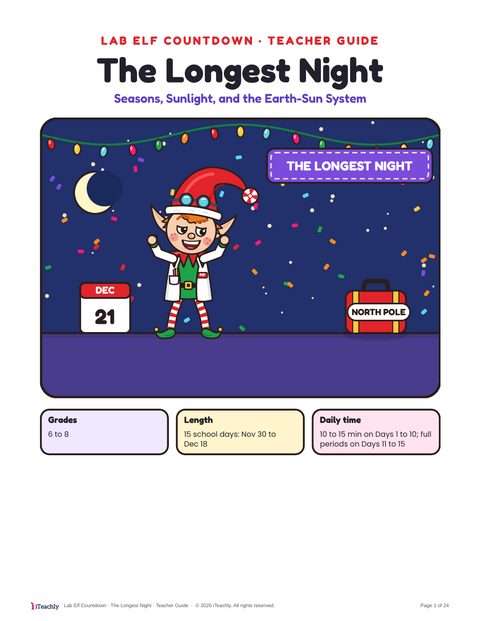 24 pages
Teacher Guide
Send Me the Free Lab3 PDFs. Free. The link goes to your personal email.
NGSS Standards in This Seasons Lab
Here are the standards this unit teaches and the days that teach them. Tap a standard to read it.
MS-ESS1-1 Seasons portion: Days 1 to 4, 6 to 9, 13 to 15 (lunar phases and eclipses are not covered here)
MS-ESS1-1: Develop and use a model of the Earth-sun-moon system to describe the cyclic patterns of lunar phases, eclipses of the sun and moon, and seasons.
MS-PS4-2 Connection only, not assessed: the black card absorbs light energy (Days 5, 11, 12)
MS-PS4-2: Develop and use a model to describe that waves are reflected, absorbed, or transmitted through various materials.
Science and engineering practices: Developing and using models; Planning and carrying out investigations; Analyzing and interpreting data. Core ideas: ESS1.A The Universe and Its Stars; ESS1.B Earth and the Solar System (seasons are caused by the tilt of Earth's axis); PS4.B Electromagnetic Radiation. Crosscutting concepts: Patterns; Cause and Effect; Systems and System Models.
The Story, Day by Day
The driving question: Why are December days so short and cold in the north, while it is summer in Australia? Here is how Pip gets your class to the answer in 15 school days.
Week 1 · Nov 30 to Dec 410 to 15 minutes a day
Swipe to see each day →
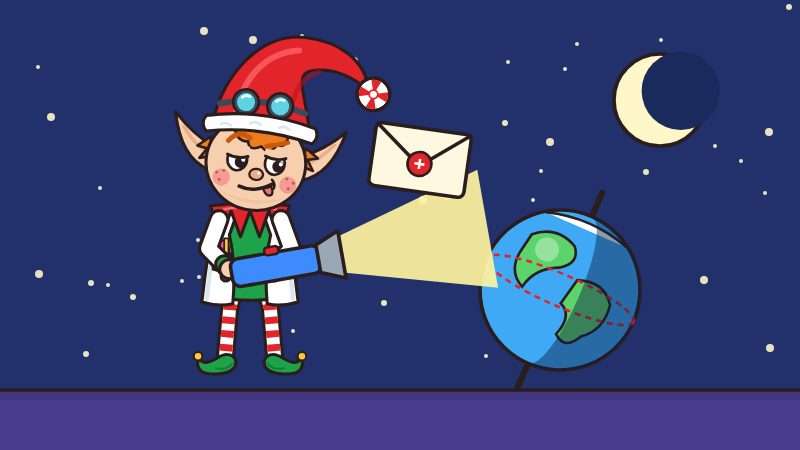
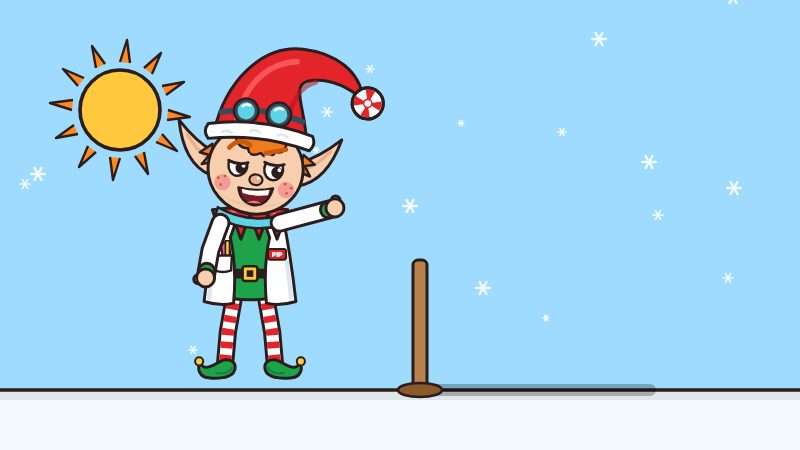
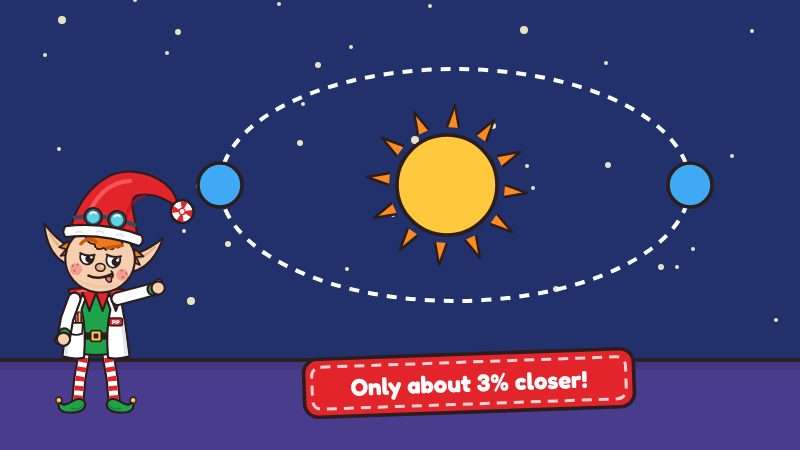
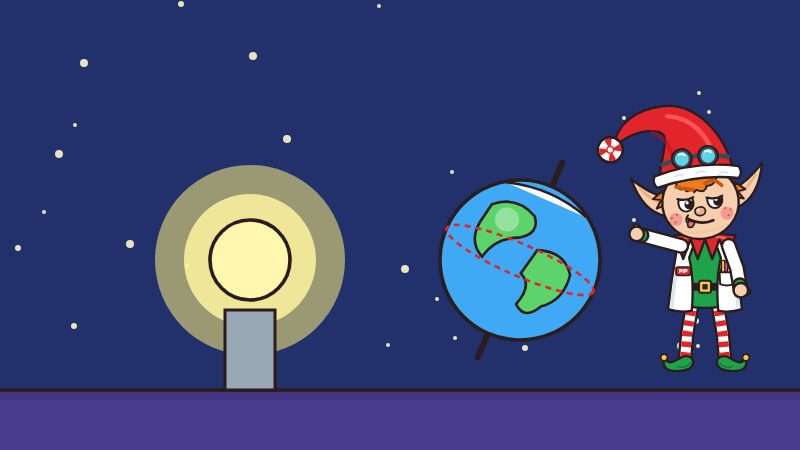
Week 2 · Dec 7 to 1110 to 15 minutes a day
Swipe to see each day →
Week 3 · Dec 14 to 18Lab week · full class periods
Swipe to see each day →
Short on School Days in December? It Still Works.
Nobody has 24 school days in December, so Pip doesn't try. He is written to arrive the Monday after Thanksgiving (November 30) and leave on the last school day before break (December 18).
Weekends are part of the story. The first Friday, Pip asks everyone to catch the sunset time. The second Friday, teams take the lab plan home and write a hypothesis.
Different calendar? See which days to combine or stretch
- Break starts Wed Dec 16 (12 school days): run Days 1 to 10 as written, and have groups build their cards at the end of Day 10. Mon Dec 14: Day 12 lab (skip the practice run). Tue Dec 15: Day 13 graph plus the Day 15 CER, with models shared in a gallery walk instead of Day 14.
- Cloudy all month? Use the backup shadow data on Days 2 and 7. The lab itself runs indoors.
- Break starts later (Dec 22 or after): hold the Longest Night Party on December 21 itself, the actual solstice, and add a Day 16 lunar phases model.
- Starting late? Pip can arrive any Monday. The calendar page in the Teacher Guide shows which days to combine.
Out sick? The sub plan is a one-page reading called Pip's Field Notes, with questions and an answer key. It works on Days 3, 4, 6, 8, or 9.
The Seasons Lab: Sun Angle and the Reason for the Seasons
Lab question: How does the angle of light hitting a surface change how much the surface warms up?
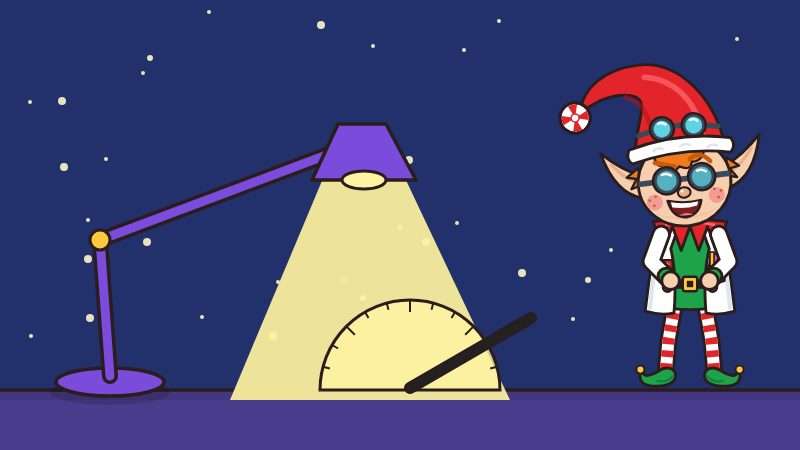
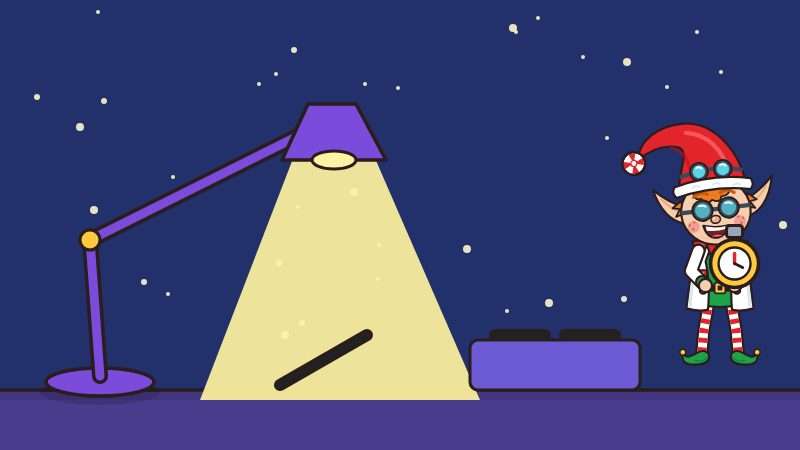
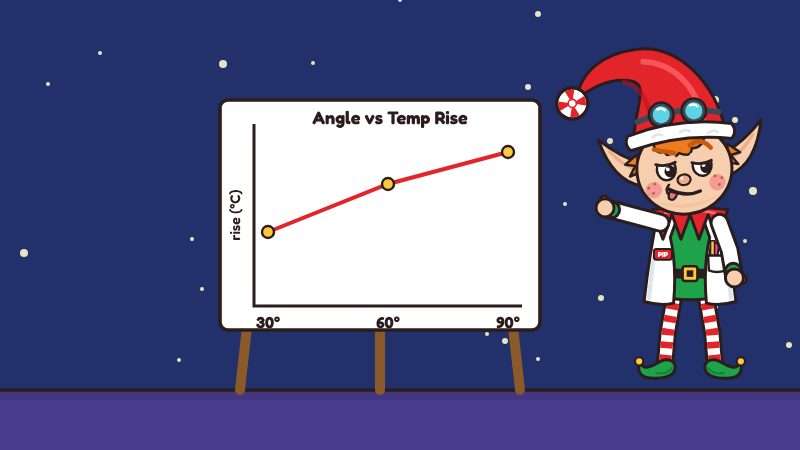
Each team tapes a thermometer into a paper pocket on the back of each black card, then warms one card at a time for 10 minutes under a heat lamp at sun angles of 90°, 60° and 30°. The data shows that light hitting at a low angle spreads out and warms the card less. That is what happens to the Northern Hemisphere in December.
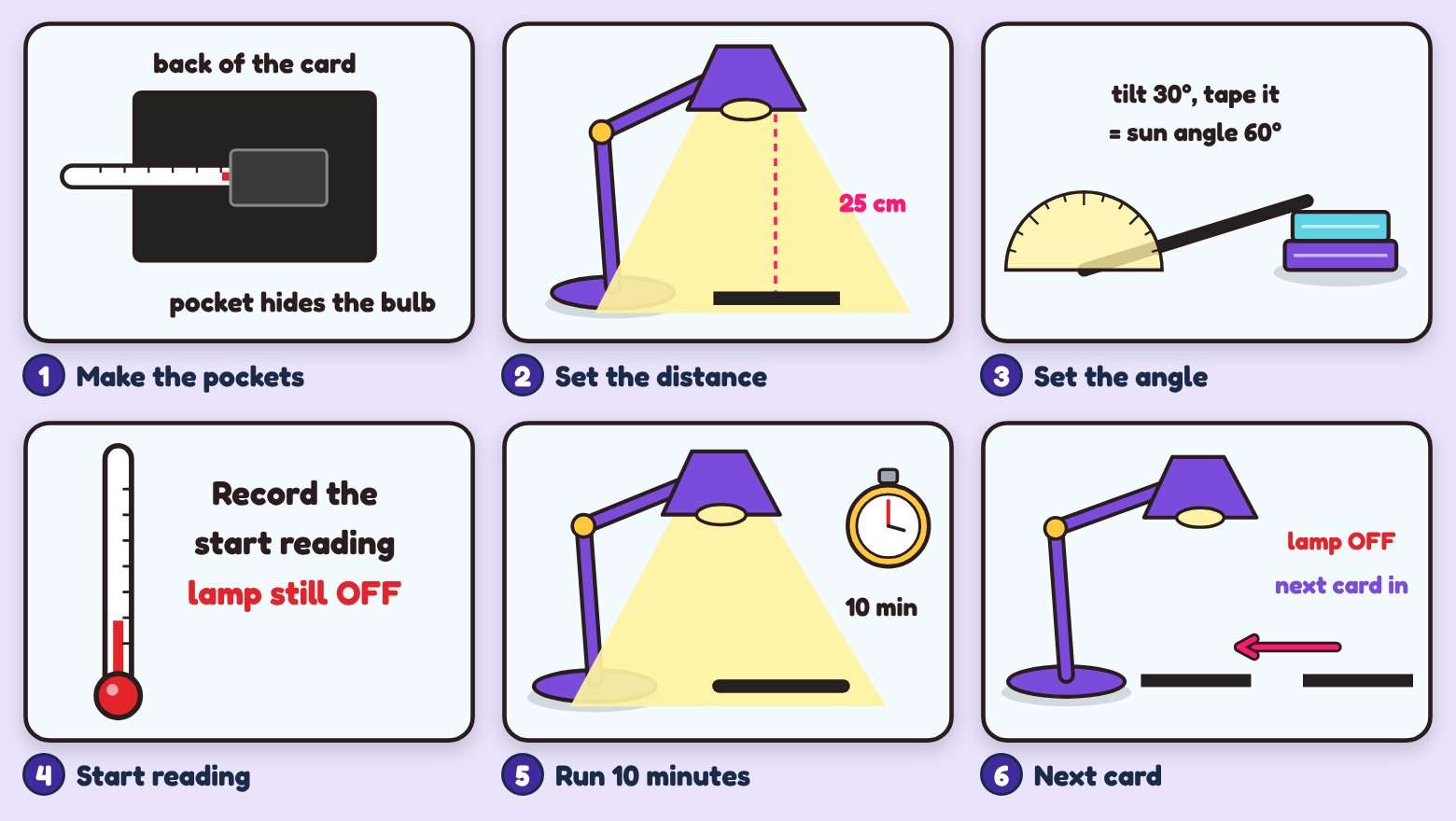
Tap the picture to see it full size.
Students follow picture directions, so the steps stay clear. Order two things now: a clamp lamp and a 50 to 75 W incandescent heat bulb (the kind sold for reptile tanks) for each lab group, which is 8 of each for a class of 30, and black cardstock. LED bulbs give off too little infrared to warm the card, and cardstock stays flat under the lamp. The rest is easy to find: thermometers (3 per group), protractors, rulers, flashlights, foam balls, a globe and a stick for the noon shadow. An adult moves the lamps, and the Teacher Guide covers the safety steps.
So What's the Catch?
There isn't one. iTeachly is a science curriculum membership built by teachers. We give labs like this away because the best way to show you what we make is to let you teach it.
If you like how Pip runs your December, you'll like the rest of iTeachly: every lesson for Physical Science, Life Science, Earth and Space Science, Biology and Chemistry, already done. You can try all of it for $1 for 7 days. After that it is $49 a month for one course or $97 a month for all five. Cancel before day 7 and you won't pay another cent.
More Free Christmas Science Activities for Middle School
Pip has two more December storylines. Each one is free and has its own post. Sign up for any one of them and Pip emails you all three:
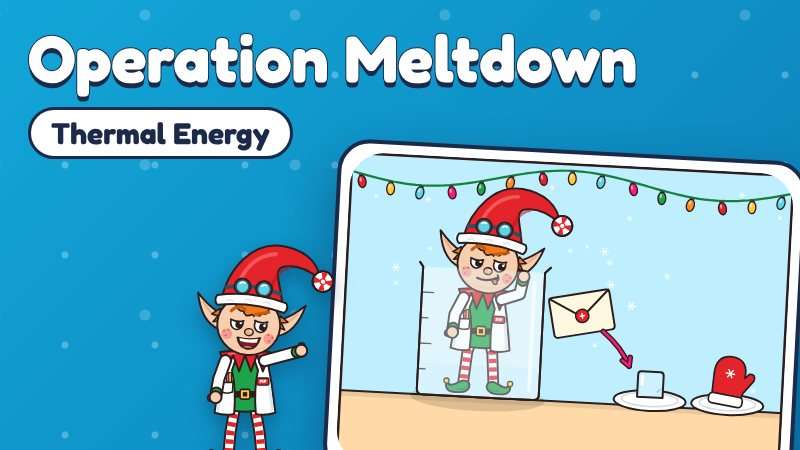 Operation MeltdownFree thermal energy lab for grades 6 to 8
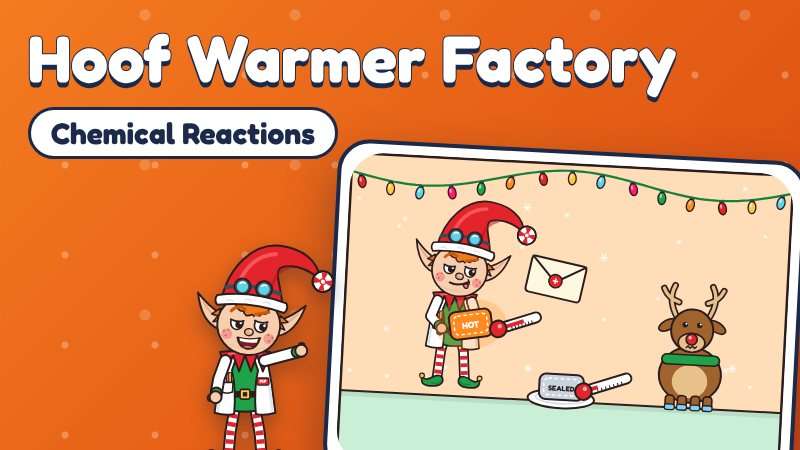 Hoof Warmer FactoryFree chemical reactions lab for grades 6 to 8
Want a lab for the rest of the year? Try our free Modeling the Seasons Lab Activity and Climate Change Lab Activity, or see how the full course is laid out in the Earth and Space Science curriculum map.
Frequently Asked Questions
What grade is this for?
Grades 6 to 8. The reading level and the standards are middle school.
How much class time does it take?
Days 1 to 10 take 10 to 15 minutes each, as a bell ringer or warm-up. Days 11 to 15 are full class periods for the lab.
When does it start?
Pip is written to arrive on Monday, November 30, 2026 and leave on Friday, December 18. The calendar page in the Teacher Guide shows what to combine if your break starts earlier or later.
Can I start late?
Yes. Pip can arrive any Monday. If you have fewer than 15 school days, the calendar page in the Teacher Guide shows which days to combine.
I teach several periods. Does it still work?
Yes. Pip stays in his scene all day. Anything that melts, cools or gets used up is set out fresh for each period, and each daily page tells you what.
Do I need an elf doll?
No. Print the Pip stand-up cutout on the last page of Pip's Daily Notes. If you have an elf doll, any one about 30 cm (12 inches) tall works, and a white sock makes a quick lab coat.
What do I need to buy?
The two things to order are clamp lamps with 50 to 75 W incandescent heat bulbs (sold for reptile tanks), one for each lab group, and black cardstock. Everything else is classroom basics: thermometers, protractors, rulers, flashlights, foam balls and a globe. The Teacher Guide has the full gather and buy list with amounts for a class of 30.
What if it is cloudy all month?
The journal has backup shadow data printed on the two outdoor days (Days 2 and 7). The sun angle lab itself runs indoors with a lamp, so weather never stops it.
Can I use it if my school is not on NGSS?
Yes. The science is the same in every state, and every day lists its big idea so you can match it to your own standards.
Does it work with Google Classroom or Canvas?
Yes. Print the journal as a packet, project Pip's notes, or post the PDFs in Google Classroom, Canvas or Teams. No video is needed for any day.
Is it really free?
Yes. Tell us where to send it and we email you a link to your download page with all three PDFs. We will also send you free science labs and news from iTeachly, and you can unsubscribe anytime.
Ready for Pip to Move In?
Grab The Longest Night now so it is printed before Pip's first morning. He is written to arrive Monday, November 30. Starting later works too.
Send Me the Free Lab
Not ready yet? Save this pin so you can find The Longest Night later.
Save to Pinterest